Deliberately picking the worst option in Lacey's Flash Games is not a failure state — it is the fastest way to see what the game is actually hiding. This single-player point-and-click oddity tracks what you click, remembers it, and quietly reshapes later scenes, so chasing Lacey's Flash Games wrong choices teaches you more about the design than a clean run ever will.
The game never grades your decisions out loud. There is no morality meter, no pop-up warning, and no "are you sure?" prompt. You click something, the scene moves on, and the consequence surfaces minutes later in a line of dialogue or a locked door. That silence is exactly why experimenting with bad decisions is worth the time — and why a second or third run reveals how much of the story was always conditional.
How Wrong Choices Actually Register in Lacey's Flash Games
The first thing to understand is that the game does not treat a "wrong" choice as an error. It treats it as data. Every interaction is logged, and the narrative reacts on a delay rather than instantly, which is why players often finish a scene believing their click did nothing at all.
Community reports describe the tracking as scene-flag based: the game stores whether you helped, ignored, or actively sabotaged a given character, then checks those flags when the next scene loads. Because the checks happen at load time rather than mid-scene, the reaction can feel disconnected from the click that caused it. That delay is a design choice, not a bug.
Three behaviors are worth knowing before you start poking at the system: the immediate reaction (a same-scene dialogue line that most players catch), the deferred reaction (a scene-flag check that fires one or two scenes after the click, usually surfacing as a locked path or a colder tone), and the silent flag (no on-screen feedback at all, yet the ending branch shifts). The silent category is the reason lacey's flash games wrong choices feel so unpredictable on a first run — with no confirmation cue, a sabotaged character flag can sit invisible for several scenes before it reshapes the ending.
-
Immediate reactions — a character responds in the same scene, usually with a short line of dialogue. Easy to spot, easy to miss the long-term weight.
-
Deferred reactions — the flag fires one or two scenes later, often as a blocked path or a colder tone.
-
Silent flags — nothing visible happens, but the ending branch shifts. These are the ones that make Lacey's Flash Games consequences so hard to map on a first run.
How the Minimal Controls Raise Stakes
Lacey's Flash Games mouse gameplay is deliberately minimal. You move a cursor, you click, and that is the entire interaction vocabulary. There is no inventory juggling, no keyboard shortcuts, and no way to "undo" a click once the scene advances.
That constraint is what makes wrong choices so consequential. In a game with a rewind button, a bad click costs you nothing. Here, the click is the commitment. Players who come from modern adventure games often click through dialogue options expecting a safety net and are surprised when the scene simply continues without them.
The upside is that mouse-only play keeps experimentation cheap. You can run an entire scene in under a minute, so testing a deliberately hostile response costs very little real time. Treat each click as a cheap probe rather than a permanent verdict.
Mapping Lacey's Flash Games Consequences Before You Commit
The practical approach is to build a mental map of which decisions echo forward and which ones evaporate. Not every choice is load-bearing. Some clicks only change a single line of flavor text, while others quietly determine whether an entire branch stays open.
| Decision Type | Typical Reaction Speed | Visible Impact | Worth Replaying For |
|---|---|---|---|
| Dialogue tone (rude vs. polite) | Next scene | Dialogue variation only | Low |
| Helping vs. ignoring a character | 1–2 scenes later | Access to a scene or item | High |
| Refusing a direct request | Immediate + deferred | Locked interaction later | High |
| Clicking scenery objects | Immediate | Flavor text, occasional hint | Medium |
| Staying silent when prompted | End of chapter | Ending branch shift | Very high |
The pattern is clear: the louder the game reacts, the less it matters long-term. The quietest choices — the ones where nothing seems to happen — are the ones that reshape the ending. That inversion is the core of how Lacey's Flash Games consequences work, and it is why a first playthrough almost never shows you the full picture.
Reading the Scene for Load-Bearing Clicks
Before clicking anything, scan the scene for objects that are animated, highlighted on hover, or positioned slightly off-center. Those are almost always the interactive elements, and the game rarely wastes an interactive object on pure decoration. This matters most in the wrong-choice hotspots: a flickering lamp or a cursor-reactive doorknob is usually the load-bearing click that branches the scene, while static background props like a plain wall poster or a fixed rug are safe to ignore. Because Lacey's Flash Games relies on mouse gameplay rather than keyboard prompts, the only affordance you get is the hover state itself — so sweep the cursor slowly across the frame and watch for the pointer change or a subtle glow. Skipping this pass is how players burn a wrong choice on scenery and lose the consequence branch they actually wanted to explore.
If a scene gives you exactly two options and one of them is obviously hostile, that is a signal. The designers built the hostile path because they wanted someone to take it. Deliberately choosing it is not trolling the game — it is accessing content that polite playthroughs never reach.
Running Deliberate Bad Playthroughs Without Wasting Time
A full run is short enough that a dedicated "worst choices" playthrough is realistic, but you still want structure. Randomly clicking everything produces noise, not data. The goal is a controlled run where you know exactly which variable you changed.
Here is a workflow that community players use to isolate outcomes: treat each run as a single-variable experiment rather than a scavenger hunt, because Lacey's Flash Games flags are cumulative and a mixed run makes it impossible to tell which wrong choice triggered a given consequence. For example, refusing every optional interaction in one pass lets you confirm whether a missing item or a missing dialogue flag is what locks a late-game branch, while a separate hostile-to-everyone run isolates relationship penalties from item penalties. Logging the scene number at each deviation keeps the cause-and-effect chain traceable across multiple playthroughs.
-
Pick one axis per run. Either be hostile to every character, or ignore every request, or refuse every optional interaction. Do not mix all three at once.
-
Note the scene number when you deviate. A quick timestamp or scene count is enough to trace a consequence back to its cause.
-
Finish the run even if it feels broken. Several branches only pay off in the final chapter, and quitting early hides the payoff.
-
Compare endings, not mid-game states. The ending is where the flags consolidate into a readable result.
This is also where Lacey's Flash Games multiple playthroughs stop feeling repetitive. Each run answers a specific question, so the repetition has a purpose rather than being a grind. If you want a scene-by-scene reference to keep your runs aligned, the minigame order guide lays out the sequence so you are not guessing where you are.
What to Record Between Runs
Keep a simple three-column note: scene, action taken, and anything that changed afterward. Most players only need a dozen entries before the pattern becomes obvious. The flags cluster around a small number of characters, and once you identify the recurring names, the rest of the map fills in quickly.
The Replay Loop: Why Lacey's Flash Games Replay Value Holds Up
Replay value in a short narrative game usually comes down to whether the second run feels different or just faster. Here, it feels different, because the conditional content is genuinely gated rather than cosmetic. Scenes you never saw on run one exist on run two, and some of them reframe earlier events entirely.
The full gameplay overview is a useful companion if you want to see how the point-and-click mechanics chain together before committing to a second run, since understanding the click logic makes deliberate deviation much easier to plan.
A rough comparison of what each run type actually delivers shows the spread is wider than the shared click logic suggests: the hostile run trades a short time cost for alternate dialogue, locked scenes, and a darker ending, while the pacifist/helpful run unlocks warmer interactions that fill in character context the hostile path skips. The first blind run establishes the baseline branch, and the completionist sweep costs the longest time for the remaining flavor text and minor branches — so the table below maps each path to its payoff rather than ranking them by length.
| Run Type | Time Cost | New Content | Best For |
|---|---|---|---|
| First blind run | Baseline | Core story, one ending branch | Understanding the baseline |
| Hostile run | Short | Alternate dialogue, locked scenes, darker ending | Seeing consequences fast |
| Pacifist/helpful run | Short | Unlocked interactions, warmer ending | Completing the character picture |
| Completionist sweep | Longest | Remaining flavor text and minor branches | Full flag coverage |
The hostile run is the single highest-value replay because it unlocks the most unseen content per minute spent — its short time cost buys alternate dialogue, locked scenes, and a darker ending all at once, whereas the completionist sweep spends the longest time for the thinnest yield of remaining flavor text and minor branches. Players who only ever play politely are, in a real sense, seeing the smaller version of the game: the pacifist/helpful path fills in warmer character context but skips the consequence-driven scenes that reframe earlier events, so a single polite run leaves the darker ending branch and its locked scenes entirely unvisited.
Does the Game Punish You for Bad Choices?
Not in the way most games do. There is no game over, no stat penalty, and no locked-out final chapter. The punishment is narrative: characters remember, doors stay shut, and the ending reads colder. That is a softer consequence model than a fail state, and it is why experimenting is low-risk.
The one genuine cost is time. A hostile run closes some optional scenes permanently within that save, so if you want to see everything in a single file, you cannot. That is the argument for Lacey's Flash Games replay as a design feature rather than a chore — the game is built to be re-entered.
Single-Player Design and What It Means for Experimentation
Lacey's Flash Games single player structure removes the social pressure that usually shapes choices. There is no one watching, no shared save, and no reputation to protect. That makes it the ideal environment for deliberately picking the option you would never pick in front of another person.
It also means the game cannot rely on other players to surface its content. Everything you learn about the branches has to come from your own runs or from community write-ups. That is why the prologue and ending requirements guide exists — it consolidates what players have pieced together about which flags gate which endings, so you are not reverse-engineering the whole system alone.
A few practical notes on the solo structure: because the game runs on mouse-only click gameplay, every wrong choice is a single deliberate click rather than a timed or reflex-driven input, so you can pause on a branch point and consciously decide to test the outcome you'd normally avoid. Pair that with the fact that consequences only surface after you commit, and the single-player setup turns each replay into a controlled experiment — you change one decision, then compare the resulting branch against your clean file.
-
Saves are local and separate, so you can keep a "clean" file and a "chaos" file side by side without interference.
-
No autosave overwrite anxiety — you can replay a chapter without losing your main progress.
-
No time pressure — scenes wait for your click, which makes deliberate experimentation comfortable.
That last point matters more than it sounds. Because nothing advances until you click, you can sit on a decision and think about which branch you want to test next. The pacing is entirely yours. In practice this turns each decision screen into a checkpoint you control: you can leave the tab open, walk away, and come back to the same prompt without a timer forcing a wrong choice you did not intend to make. That is what makes the mouse-only click gameplay so useful for mapping consequences — you can plan a run around a single branching prompt, commit to the option you would normally avoid, then note which ending flag it triggers before reloading your clean file.
Watching a Hostile Run in Action
If you want to see how a deliberately messy playthrough actually looks before committing your own time, this community recording walks through the game with a chaotic approach: expect rapid-fire mouse gameplay where wrong choices stack, the tone shifts on a dime, and the single player run turns hostile fast. Treat it as a preview of the consequence chain rather than a tutorial — note which branch triggers the sharpest reaction, then plan your own replay around that specific wrong choice instead of copying the whole run.
- Playing Lacey's Flash Games was a Bad Idea! by BXND1T GAMING — a useful reference for how quickly the tone shifts when you stop cooperating.
Watching someone else take the hostile path is a legitimate shortcut, since Lacey's Flash Games punishes wrong choices with instant tone shifts and abrupt fail states rather than a slow tutorial curve. In the BXND1T GAMING recording, the rapid-fire mouse gameplay means a single misclick can flip a scene from playful to hostile before you register why. Use the video as a preview of the consequence chain: note which branch triggers the sharpest reaction, then spend your own replay verifying just that wrong choice instead of re-running the entire hostile path.
Common Misreads That Cost Players Content
Most players who feel the game is "shallow" on a first run are actually misreading the feedback loop. The game hides its reactions, so a lack of visible response gets interpreted as a lack of consequence. That assumption is wrong, and it is the single biggest reason people miss content.
| Misread | What the player assumes | What the flag system actually does | Demo scene where it bites | Documented trigger / verification |
|---|---|---|---|---|
| Silent prompt = dead end | "No reaction means the click did nothing" | Sets a hidden write-once flag with no on-screen confirmation | Lacey's Petshop — normal playthrough vs. hidden "About us" text | Steam guide: hidden "About us" page references "20 times on the dog"; clicking the dog 20 times triggers the alternate version matching the original source video |
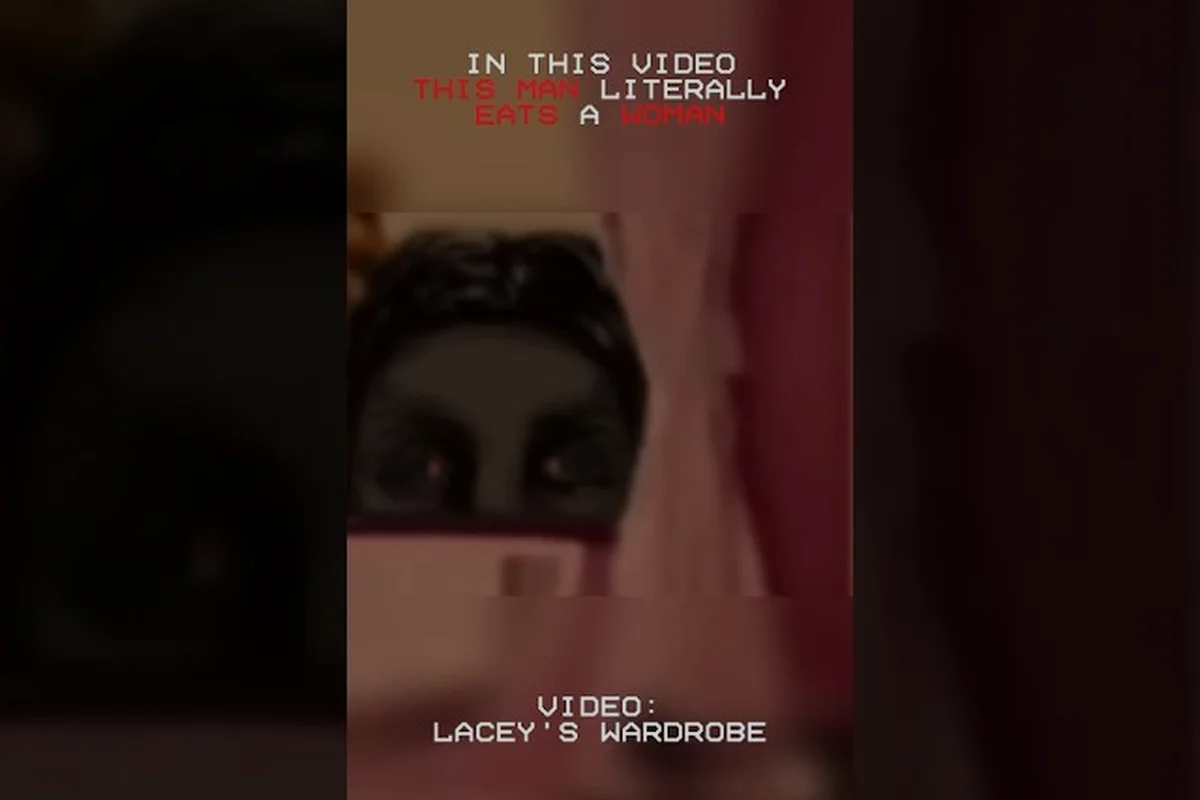
| Later dialogue can undo an earlier choice | "I can apologize or re-pick at the next prompt" | Flag is set once per save slot; no apology mechanic exists | Lacey's Wardrobe — gift option during outfit dressing | Steam guide: dress Lacey until the segment completes using the gift option; no good ending found, so the original video route is followed instead |
| Ending resolves the same regardless of route | "The finale is fixed, so early flags wash out" | Ending node branches on accumulated flags, not a single final choice | Lacey's Love Meter — input-box sequence | Steam guide: type "Lacey" in the left box and "Uncle" in the right box to trigger the sequence |
| Secret content is flavor text | "Hidden page text is just lore dressing" | Hidden text encodes the exact input count needed for the alternate branch | Lacey's Petshop "About us" page | "20 times on the dog" is the literal click count, not a hint to approximate |
| Mini-game order is cosmetic | "Any order reaches the same flags" | Grace's hints reference the previous game, chaining context across segments | Grace's dialogue across demo segments | Steam guide: Grace drops hints referencing the previous game; Lacey's Diner video "seems to reveal a lot more than Lacey's Petshop" |
Three specific misreads show up repeatedly in community discussion, and each one maps to a different failure point in the flag system. The first is treating a silent prompt as a dead end when it actually sets a hidden flag with no on-screen confirmation. The second is assuming a later dialogue choice can undo an earlier one, when most flags are write-once per save slot. The third is expecting the ending to resolve the same way regardless of route, even though it is the most conditional node in the game and branches on accumulated flags rather than a single final choice.
-
"Nothing happened, so it didn't matter." Silent flags are the most impactful category. No reaction is not the same as no effect.
-
"I can fix it later." Most flags are set once and never reset within a save. There is no apology mechanic.
-
"The ending is fixed." The ending is the most conditional part of the game. It is the last thing you should assume is stable.
Correcting these assumptions changes how you play, because the flag system rewards attention over reaction. Once you accept that silence equals consequence, you start treating every prompt as a real fork rather than flavor text — and that shift is measurable. A player who replays the same early scene and clicks through the silent prompt will land on a different route branch than one who pauses to weigh it, even though neither sees a confirmation cue in the moment. That is why lacey's flash games replay value hinges on the write-once flag model: your first pass through a silent prompt is your only chance to set it, and the mouse gameplay gives you no undo button to test the alternative. Treating prompts as real forks also reframes multiple playthroughs — instead of chasing a "better" ending, you are deliberately probing which silent flags you left unset, and the ending node will tell you how many accumulated flags you actually triggered.
A Quick Sanity Check Before Each Click
Ask one question: if this choice were permanent, would I be fine with it? If the answer is no, that is precisely the choice worth testing on a throwaway save. The game rewards the player who treats decisions as experiments rather than commitments.
Frequently Asked Questions
Do wrong choices in Lacey's Flash Games lock you out of the ending?
No. There is no fail state and no locked final chapter. Bad decisions shift which ending branch you receive and close some optional scenes within that save, but you can always reach a conclusion. If you want a specific ending, you simply need a fresh run with the right flags set.
How many playthroughs do I need to see most of the content?
Two focused runs cover the majority: one cooperative and one deliberately hostile. A third completionist sweep catches the remaining flavor text and minor branches. Because a full run is short, most players finish all three in a single sitting without feeling fatigued by the repetition.
Does the mouse-only control scheme limit what choices I can make?
It limits how you interact, not what you can decide. Every meaningful choice is a click, and the game never hides an option behind a keybind or a timed input. The mouse-only design actually makes deliberate experimentation easier, since there is only one input to think about at any moment.
Can I undo a bad choice mid-scene?
No. Once a scene advances, the flag is set for that save. The workaround is save management: keep a separate file for experiments so your main progress stays intact. Players who test hostile options on a throwaway save never lose access to the scenes they wanted to keep.
Is replaying worth it if I already know the story?
Yes, because the story you know is only one branch of it. The conditional scenes reframe earlier events and add context that a single run cannot provide. Replaying is how the game's actual structure becomes visible, and it is the reason the short runtime never feels like a limitation.
What Deliberate Deviation Actually Teaches You
The real takeaway from chasing Lacey's Flash Games wrong choices is that the game is more responsive than it first appears. Its silence is a filter, not an absence — the loud reactions are cosmetic, and the quiet ones decide where the story lands. Once you internalize that inversion, every prompt becomes readable as a fork rather than a formality.
A hostile run costs almost nothing and unlocks the most unseen material, so it belongs early in your time with the game rather than as a last resort. Keep a separate save, change one variable at a time, and finish each run so the ending can consolidate your flags into something legible. The game was built to be re-entered, and the version most players see first is the smaller one.