
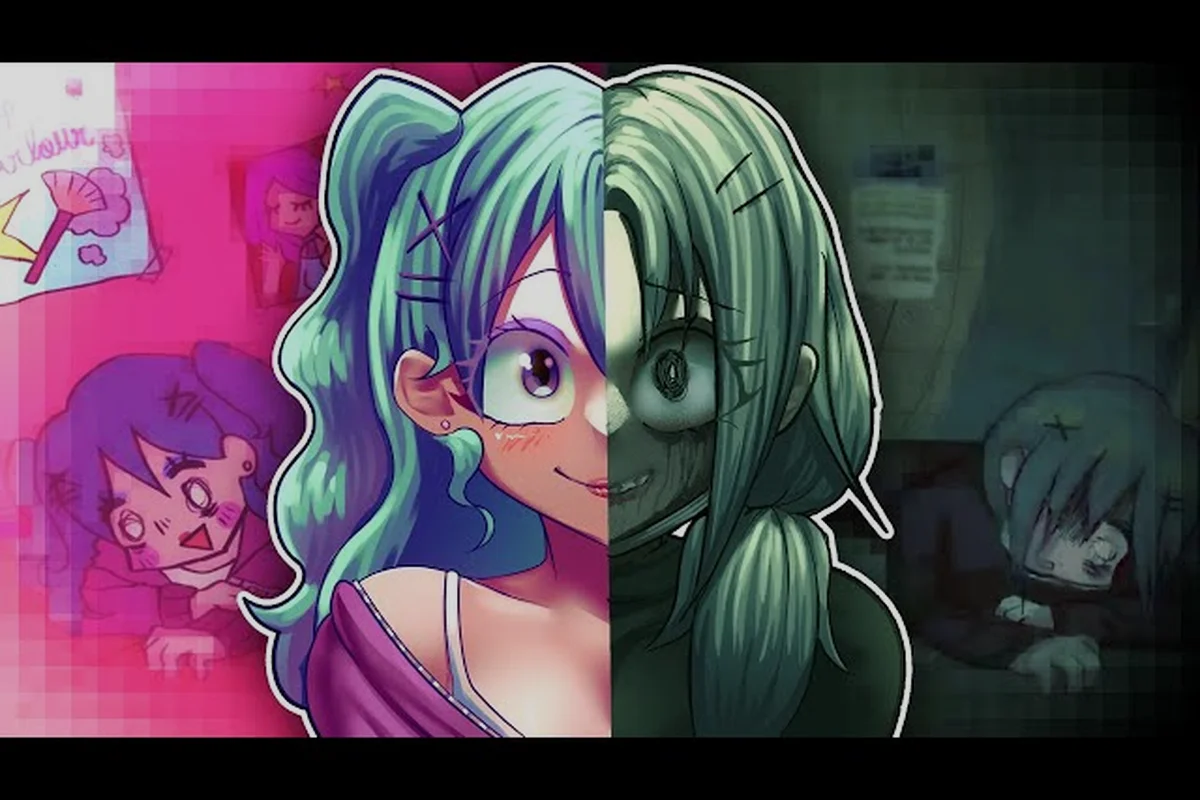
The Lacey's Flash Games Grace narrator is the voice that greets you before any mini-game loads, and she is also the single biggest clue in the entire mystery. Understanding who she is, why she keeps insisting she is innocent, and how she connects to charchar887 turns a strange collection of browser-style games into a coherent story.
This breakdown walks through everything the community has pieced together about Grace, from her in-game lines to her ties with the missing creator Rocio Yani. If you have finished the collection and still feel like you missed something, this is the thread to pull.
Grace and Her Narrator Role
Grace is the framing device of the whole collection. She introduces each activity, comments on your performance, and repeatedly denies involvement in whatever "people have been saying out there." That denial is the hook: the more she protests, the more the player suspects she is hiding something.
According to the community-maintained Grace Asop page on the Lacey Games Wiki, she is one of the cofounders of Yaniaso Games alongside Rocio Yani. The wiki describes her as aloof, easily fooled, and fairly apathetic toward Rocio — a characterization that matters enormously once you start connecting her narration to the disappearance at the center of the story.
Her role splits into three layers that players usually notice in this order: the cheery onboarding voice of the early minigames, the increasingly defensive narrator who volunteers denials nobody asked for, and finally the unreliable witness whose account contradicts the on-screen evidence — a progression the wiki's Grace Asop entry frames through her cofounder status at Yaniaso Games and her apathetic, easily-fooled temperament toward Rocio, which is precisely why her rehearsed warmth reads as scripted rather than sincere once the disappearance thread surfaces.
-
The friendly host — she welcomes you and explains controls in a warm, slightly rehearsed tone.
-
The defensive narrator — she starts addressing rumors directly, insisting she is not responsible.
-
The unreliable witness — her story stops matching what the games themselves show you.
That third layer is where the Lacey's Flash Games Grace narrator stops being a tutorial voice and becomes a character with motives. Community reports consistently describe the shift as gradual, which is why many first-time players finish the collection without consciously registering that the host was lying to them.
The Narrator Persona vs. the Character
It helps to separate the voice you hear from the person the lore describes. The narrator persona is polished and cheerful, almost like a children's television host. The character Grace Asop, as documented by the community, is withdrawn and indifferent to her cofounder.
That gap is deliberate. The cheerful host voice is a performance, and the performance is what makes her denials feel so unsettling. When she says she is not behind "what people have been saying out there," she is speaking as the persona, not as the person — and the game wants you to notice the seam between the two.
If you want the broader cast mapped out first, the narrator characters overview covers how Grace fits alongside the other voices in the collection — including the contrast with Charchar887, the online alias tied to the Charlie thread that fans keep separate from Grace's own backstory. Read it before this section if the names blur together, since the collection deliberately splits the sunny narrator, the withdrawn Grace Asop, and the Charchar887 identity across different pages. That separation matters for the denials above: the overview shows which voice belongs to which name, so you can tell when the cheerful persona is speaking and when the lore's real character is being described.
Lacey's Flash Games Grace Explained Through Her Dialogue
The fastest way to understand Grace is to actually listen to what she says and when she says it, because her dialogue is not decoration — it is the delivery mechanism for the entire analog horror arc. Her lines follow a pattern that escalates across the collection, and the escalation is the story: early-game Grace sounds like a friendly tutorial guide, mid-game Grace starts dropping references she shouldn't know, and late-game Grace begins preemptively denying "what people have been saying." Each stage is calibrated to the player's progress, so the horror lands not through a jump scare but through the growing gap between Grace's warm narrator persona and the accusations she keeps addressing before anyone has voiced them.
| Stage | What Grace Says | What It Implies |
|---|---|---|
| Opening games | Warm greetings, control tips, playful encouragement | She wants you comfortable and compliant |
| Mid collection | Casual references to "the others" and old projects | She knows more about the studio than she admits |
| Late games | Direct denials about "what people have been saying" | She is aware of accusations and is preemptively defending herself |
| Endgame | Shifts in tone, hesitation, unfinished sentences | The persona is cracking under pressure |
The mid-collection references are the most important row in that table. Grace never names the others explicitly, but the way she mentions past projects implies she was present for events she later claims not to remember. Players who replay the collection often report catching lines they completely missed the first time, because the early dialogue is designed to sound like harmless flavor text.
Why Her Denials Matter
A denial only makes sense if there is an accusation. Grace's insistence that she is not behind the rumors tells you two things at once: something bad happened, and the community in-game blames her for it. That is a remarkably efficient piece of storytelling, because it delivers exposition without ever explaining the event directly.
The Lacey's Flash Games analog horror explained angle lives almost entirely in this technique. Instead of showing you the incident, the game shows you a person reacting to the incident's aftermath, and your brain fills in the rest. Grace is the delivery mechanism for that dread.
Who Is charchar887 and How Does Grace Connect?
Here is where the lore gets genuinely tangled. Charchar887 is a name tied to the playthroughs of two specific activities in the collection — Jay's Skating Game and Lacey's Makeup Parlour — and the community wiki records that Grace and Charchar887 play through both together.
That detail reframes everything. If Grace is the narrator and Charchar887 is the player presence in those games, then the voice commenting on your actions and the entity performing them are two separate characters with a relationship. The Lacey's Flash Games charchar887 thread is essentially the question of what that relationship actually is.
| Question | Community Consensus | Confidence |
|---|---|---|
| Is charchar887 a person? | Treated as a handle or username, not a legal name | High |
| Is charchar887 the same as Charlie? | Widely assumed to be the same figure | Medium |
| Does Grace control charchar887? | Suggested by the framing, never confirmed | Low |
| Are they cofounders too? | No evidence in community records | Low |
The Lacey's Flash Games Charlie reference appears often in discussions because "Charlie" reads as a natural shortening of the handle. Whether the game intends them to be one and the same is never stated outright, and that ambiguity is almost certainly intentional. Analog horror thrives on names that almost resolve into people but never quite do.
The Yaniaso Games Connection
Both Grace and Rocio Yani are documented as cofounders of Yaniaso Games, the studio behind the collection. That makes Grace a creator, not just a host — a fact that changes how you read her narration entirely. A host who denies involvement is a bystander. A cofounder who denies involvement is a suspect.
The Rocio Yani lore breakdown digs into the missing creator side of this partnership, including what happened to the studio and why the collection surfaced the way it did. Reading the two threads side by side makes Grace's defensiveness much easier to interpret.
How Grace Fits the Lacey's Flash Games Analog Horror Formula
Analog horror works by corrupting familiar formats. Grace is the corrupted familiar format here: a friendly host voice from an era of browser games, slowly revealing that the friendliness was never real. The Lacey's Flash Games analog horror framing depends on her being believable as a host before she becomes unsettling as a witness.
Three techniques do most of the work: the retro presentation, the direct address, and the escalating contradiction. The low-fi aesthetic borrows the visual language of a genuine 2000s Flash portal — chunky pixel fonts, a looping menu jingle, a cursor that never quite lines up — so the brain files Grace under "harmless nostalgia" before the first strange frame appears. Direct address then converts that trust into discomfort: because Grace speaks to the player by name and answers questions the player never typed, her later denials land as personal gaslighting rather than narration. Escalating contradiction supplies the slow burn — a line about "just a game" in one entry is quietly undone by a comment about the player's return in the next, so each pass through the collection rewrites what the host said before.
-
Retro presentation — the low-fi aesthetic signals "old and harmless" before anything strange happens.
-
Direct address — Grace talks to you, which makes her denials feel personal rather than narrated.
-
Escalating contradiction — each pass through the collection adds a detail that conflicts with something she said earlier.
Community reports describe the effect as cumulative rather than jump-scare driven. Nothing lunges at the screen; instead, the host you trusted keeps explaining herself, and the explanations keep getting worse. The dread compounds because Grace never raises her voice — she simply returns in the next entry to clarify a detail she already stated, and the clarification contradicts the earlier line. A viewer who watches one clip gets a mild oddity; a viewer who watches the full sequence catches the host quietly revising her own account of the player's last visit, which is why the Lacey's Flash Games Grace narrator reads as slow-burn psychological horror rather than a single shock.
Why the Host Voice Is the Scariest Part
A monster is external. A narrator is inside the frame with you, guiding your attention, telling you what to think about what you are seeing. When that guide turns out to have a stake in your conclusions, the entire experience becomes unreliable — including your memory of the earlier, friendlier sections.
That is why so many players describe the collection as unsettling in retrospect rather than in the moment. Grace does not scare you while you play. She scares you afterward, when you realize what she was doing. The dread is retroactive because the host voice never breaks character inside a single game — she stays warm, patient, and encouraging through every level, so there is no jump-scare cue to react to. The horror only lands when you step back and connect her lines across the whole Lacey's Flash Games analog horror arc: the same soothing tone that walked you through a cheerful early section is the tone she uses to steer you past Charchar887's warnings, reframe Charlie's disappearance, and quietly rewrite what "winning" means. Nothing in the moment reads as a threat; everything in hindsight reads as grooming. That gap between the in-game reassurance and the post-game realization is the actual scare, and it is why the section's earlier, friendlier moments feel poisoned once you finish.
Reading Grace's Role Across the Collection
The most practical way to track Grace is to treat her commentary as a second layer of content running parallel to the mini-games. The games themselves are simple; her framing is where the narrative lives. Watch how her tone shifts between activities — a cheerful intro on one mini-game versus a clipped, distracted outro on the next often signals that the flash game's theme has brushed against the charchar887 thread. Her asides are equally load-bearing: a passing mention of a past project or another person is rarely throwaway dialogue, since the analog horror framing depends on you cross-referencing those remarks against what she later denies.
| Layer | What You Experience | What to Watch For |
|---|---|---|
| Surface | Mini-games with a cheerful host | Tone shifts between activities |
| Commentary | Grace's reactions and asides | Mentions of other people or past projects |
| Denial | Direct addresses about rumors | Specific wording of what she denies |
| Silence | Moments where she does not comment | What she avoids talking about |
That last row is the one most players overlook. Grace is talkative, so her silences stand out once you are looking for them. A host who comments on everything except one topic has effectively told you where the secret is.
If you are planning a fresh run to catch these details, the first playthrough guide covers the order and pacing that make the narrative beats easiest to follow. Play the mini-games in release order rather than jumping between them, because Grace's commentary is written to escalate: an aside she drops casually during an early flash game — a name, a half-finished sentence about charchar887 — is the same remark she flatly contradicts in a later denial segment, and the analog horror only lands if you hear the original line before the retraction. The guide also flags where her silences fall in each game, so you know which mini-game's quiet outro to replay before moving on.
Grace and the Main Character Question
Players frequently ask whether Grace is the protagonist. She is not — she is the voice around the protagonist, and the distinction matters for how the story reads. The main character analysis works through who actually occupies the player role and how Grace's narration reframes that character's actions.
Treating Grace as the protagonist flattens the mystery. Treating her as a cofounder narrating someone else's playthrough keeps the tension intact, because it leaves open the question of why she is so invested in how the events are remembered.
Common Misreadings of the Grace Narrator
A few interpretations circulate widely and are worth addressing directly, because they tend to send new players down dead ends. The most persistent is the claim that the narrator is a late addition retconned into earlier entries, a reading that collapses once you trace how her voice is seeded from the first playable frame and how the charchar887 handle surfaces in the same save files. Others flatten the Grace narrator into pure creepypasta set dressing, ignoring that her denials function as the collection's only explicit statement of the central accusation.
-
"Grace is just a tutorial voice." She is a tutorial voice for roughly the first third, then becomes a character. Dismissing her early lines as flavor text means missing the setup.
-
"Grace and charchar887 are the same person." The community wiki records them playing through games together, which reads as two entities. The connection is a relationship, not an identity.
-
"Charlie is a separate third character." Possible, but the community treats Charlie as a likely shortening of the charchar887 handle. No source confirms a distinct third figure.
-
"The denials are a red herring." They might be, but they are also the only direct statement of the central conflict. Even a misleading denial tells you what the accusation is.
The safest approach is to hold these interpretations loosely, because each one breaks down against specific evidence in the collection. The "late addition" reading fails on the seeded voice lines in the first playable frame; the "tutorial voice" reading fails once her denials begin carrying narrative weight; the "same person" reading fails on the wiki's co-play records for Grace and charchar887. The Lacey's Flash Games grace explained conversation is therefore more useful as a set of competing readings than as a single settled answer — and treating any one reading as canon tends to flatten the ambiguity the analog horror deliberately sustains.
What the Community Actually Agrees On
Strip away the speculation and a few points are consistent across community sources. Grace is a cofounder of Yaniaso Games. She is characterized as aloof and somewhat indifferent toward Rocio. She narrates the collection and denies involvement in the rumors surrounding it. She is linked to playthroughs involving charchar887.
That boundary matters most when you separate the four agreed points from the connective tissue fans have woven between them. For example, "Grace is aloof toward Rocio" is a supported characterization, but "Grace therefore sabotaged Rocio's playthrough" is a causal leap no source actually documents; the same gap separates "Grace narrates the collection" from any claim about what her narration is hiding. Treating the confirmed list as a hard checkpoint — Grace as Yaniaso Games cofounder, her indifference toward Rocio, her denial of the rumors, her link to charchar887's playthroughs — keeps a fan theory from hardening into canon, since once a guess gets repeated in a recap it starts reading like established lore and quietly contaminates every later "explained" video built on top of it.
Frequently Asked Questions
Who is the narrator in Lacey's Flash Games?
The narrator is Grace, documented by the community as Grace Asop, a cofounder of Yaniaso Games alongside Rocio Yani. She introduces each mini-game, comments on your performance, and repeatedly denies involvement in the rumors surrounding the collection, which makes her both the host and a central suspect in the story.
Who is charchar887 in Lacey's Flash Games?
Charchar887 is a handle tied to playthroughs of Jay's Skating Game and Lacey's Makeup Parlour, and community records describe Grace playing through those activities with Charchar887. Many players assume the name connects to the "Charlie" reference, though the game never confirms that link outright.
Is Grace the villain of the story?
The game never confirms it. Grace's defensive denials imply an accusation exists, and her position as a cofounder makes her a plausible suspect, but the collection deliberately withholds a verdict. Community discussion treats her as ambiguous rather than outright guilty, which is what keeps the mystery alive.
Why does Grace keep saying she is not responsible?
Because something happened that the in-game public blames her for, and she is addressing those rumors preemptively. Her denials function as exposition: they tell you a controversy exists without explaining it, letting the player piece together the incident from her reactions and the contradictions between her statements.
Do I need to replay the collection to understand Grace?
A second run helps considerably. Her early lines sound like harmless flavor text on a first pass, and the contradictions only register once you know how the story ends. Replaying lets you catch the mid-collection references to past projects and the silences where she avoids a topic entirely.
Grace works because she is never fully explained. She is a cofounder, a host, and a witness whose account does not hold together — and the collection is stronger for leaving her that way. Track her dialogue, note what she denies, and pay attention to what she refuses to discuss, because that is where the real story of Lacey's Flash Games is buried.